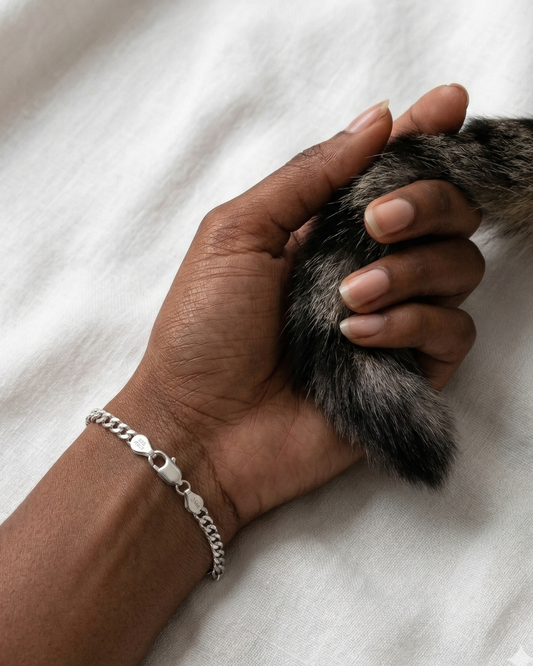
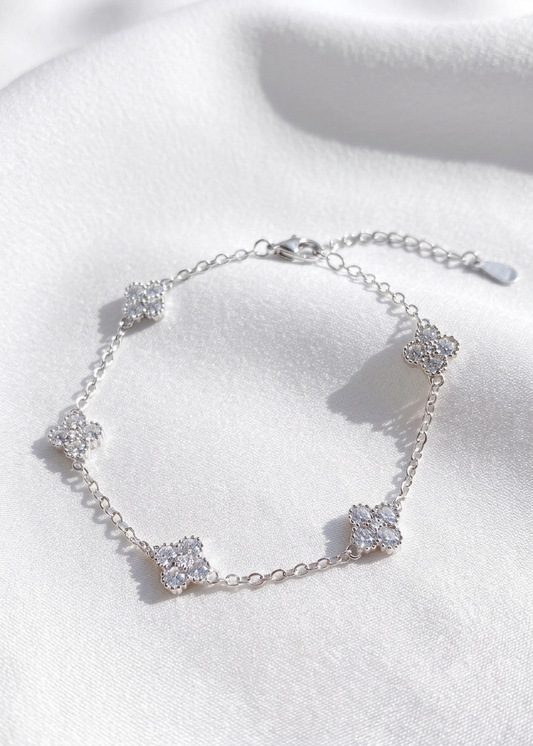
Sterling Silver 925 vs. Stainless Steel 316L: Which is better for you?
925 Silver vs
316L Stainless Steel
When you're looking for jewelry that lasts, looks good, and doesn't cause skin problems, you eventually come to the same question: 925 silver or 316L stainless steel? These are the two most common materials used in real quality jewelry. Choosing incorrectly can mean a tarnished piece in three months — or a ring that never quite feels like yours.
925 silver, also called sterling silver, is an alloy composed of 92.5% pure silver and 7.5% other metals, usually copper. The number 925 is not a brand or an arbitrary code — it is the exact composition of the material, engraved on every legitimate piece.
100% pure silver exists, but it's too soft to make jewelry that withstands real wear. Mixing it with copper gives it the necessary hardness without sacrificing that warm shine that distinguishes genuine silver from any imitation.

A legitimate piece always has the "925" stamp engraved in a discreet spot — on the inside of a ring, on the clasp of a necklace, on the back of earrings. If it doesn't have that stamp, it's not 925 silver. Over time, it develops a dark patina called tarnish. This is not a defect — it's a natural characteristic that disappears in seconds with a silver polishing cloth.
316L stainless steel is an alloy of steel with chromium, nickel, and molybdenum. The "L" indicates low carbon content — which makes it especially resistant to corrosion. It's the same material used in surgical instruments and medical implants. It's no coincidence that in jewelry, it's called surgical steel.
Not all stainless steel is the same. 304 is more common in kitchens and construction, but it's less resistant to the environments that jewelry faces every day: sweat, perfume, water, creams. 316L has molybdenum in its composition — that's precisely what makes it superior against the skin.
Jewelry doesn't live in a display case. It lives in contact with your skin, with your perfume, with water. The material you choose has to be up to that challenge.
— Salenzo
| Feature | 925 Silver | 316L Steel | Advantage |
|---|---|---|---|
| Daily durability | Scratches, tarnishes over time | Virtually indestructible | 316L Steel |
| Shine and warmth | Warm, deep, genuine shine | Cool, clean, modern shine | 925 Silver |
| Maintenance | Regular cleaning with special cloth | Zero maintenance | 316L Steel |
| Sensitive skin | Generally well-tolerated | Hypoallergenic (low nickel) | 316L Steel |
| Material value | Genuine silver with real value | Industrial steel | 925 Silver |
| Water resistance | Avoid frequent contact | Shower, pool, sea — no problem | 316L Steel |
Choose 925 silver
- You're looking for a piece for special occasions
- You value the warm glow of genuine silver
- You're willing to give it the care it deserves
- You want something that develops its own character over time
Choose 316L steel
- You wear it every day without exception
- You play sports, swim, or work in humid conditions
- You prefer zero maintenance, zero restrictions
- You're looking for absolute durability without thinking about it
Yes. And it's one of the strongest trends in minimalist jewelry today. A 925 silver ring with a stainless steel necklace works perfectly — the tones are compatible, and the mix of textures adds depth to what you're wearing.
The key is consistency in the finishes: if the ring has a mirror polish, the necklace should too. If one is matte, so should the other. The material can vary. The finish cannot.

Every material at Salenzo is chosen with intent. We don't swap silver for steel to cut costs, or vice versa. The design of each piece determines which material it deserves — and that decision is explained in the description of each product.
925 Sterling Silver
- ATENIA Ring — oval zirconia
- VIGGIA Ring — inlaid stones
- AMOUR Ring — adjustable design
- ARGENTO, GEMMA, LADINNO, CELINNE Earrings
- LÉGER and ARCANO Bracelets
- LINO Necklace — Venetian weave
316L Stainless Steel
- BEAUTÉ Necklace — pink and white zirconias
- LYRIA Necklace — rotating pendant
- For those who want no restrictions
- Resistant to water, sweat, and perfume
Yes. Frequent contact with water accelerates tarnishing. It doesn't permanently damage the piece, but it requires more regular cleaning. It's best to remove it before showering.
Neither. It's steel with a finish that can visually resemble both depending on the tone and light. It does not contain gold or silver in its composition.
Decades. Well-cared-for 925 silver is a lifelong piece. Surface tarnishing does not damage the metal — it only requires periodic cleaning with a special silver cloth.
It depends on the degree of sensitivity. 316L has low stabilized nickel content, but if your allergy is severe, consult a dermatologist. 925 silver is usually a better option in that case.
Tell us about your lifestyle and we'll recommend the exact piece for you.
Free consultation, no obligation.